
Article · Volume 4, Issue 1 · pp. 42–53
Mapping the Emerging Knowledge Structure of AI Literacy in the Workplace and Employee AI Readiness
Joel Mark Pirote Rodriguez1, Shiva Raj Adhikari2, Lourdes Quinamot Palallos1
- 1Rizal Technological University, Mandaluyong City, PHILIPPINES.
- 2Shankar Dev Campus, Government College, Kathmandu, NEPAL.
Abstract
Objective: The objective of this study is to identify the knowledge structure of AI literacy in the workplace and analyze the employee AI readiness as a new area of workforce research.
Materials and Methods: A bibliometric design quantitatively examined 3,310 papers written in English from 2015 to 2025, sourced from OpenAlex using PRISMA approach. Bibliometrix within the R framework assessed the growth of publications, scientific contribution, network collaborations, themes structure, and conceptual patterns.
Results: The findings revealed rapid growth in publications, especially from 2023 to 2025, with computer science, psychology, knowledge management, business and education disciplines influencing the field. Conceptual pattern analysis suggests that the concept of employee AI readiness is broader than merely technical skills and encompasses work-related AI knowledge, critical thinking skills, psychological readiness, continuous learning, human-AI cooperation, and organizational resources.
Conclusion: The present study offers an integration of employee-focused, fragmented interdisciplinary literature and provides a basis for building the Employee AI Literacy and Readiness Knowledge Framework.
Keywords: AI Literacy; Employee AI Readiness; Human-AI Collaboration; Workforce Development; Workplace Artificial Intelligence
FULL TEXT
INTRODUCTION
Artificial Intelligence is increasingly altering the nature of work by automating routine and rule-based tasks, improving human labor in any occupation, changing work processes, management approaches, and workforce competencies (Pereira et al., 2021; Harayama et al., 2021; Santosh et al., 2023). Nonetheless, research findings do not imply that AI "replaces" human labor. In this case, AI alters the nature of tasks, occupations, and worker-robot interactions based on how jobs are designed, implemented, and employees are trained (Lei and Kim, 2024; Rodriguez, 2024; Einola and Khoreva, 2023). Artificial Intelligence (AI) is especially useful for repetitive, routine, and rule-based activities, helping automate workflows and focus human resources on strategic, creative, and relational activities (Badhurunnisa and Dass, 2023; Sathyanarayana and Harsha, 2025). Hence, most sector-specific studies reveal complementarity and not full substitution since human labor is needed in some parts of jobs due to its skills and judgment (Zirar et al., 2023; Rodriguez, 2024). While evidence about job displacement is controversial, partial job displacement and significant job redistribution seem to be more common than complete job loss (Lazaroiu and Rogalska, 2023; Maria et al., 2025).
Within this evolving work environment, AI literacy has been identified as an essential workforce skill comprising the ability to comprehend AI, comprehend what it can and cannot do, engage with AI-based technologies, analyze AI outputs, and adopt intelligent technology wisely. At work, these skills go further than digital skills since workers have been found to need the ability to combine AI into their work, comprehend AI-based data, and collaborate with AI technologies. It is, thus, evident that AI literacy is related to AI readiness of employees, which refers to the readiness of workers to operate within an AI-powered work environment via AI literacy, application skills, self-efficacy, critical evaluation, ethics, human-AI collaboration, and adaptability. Within this context, AI literacy may be considered a core workforce skill.
Despite the increasing significance of the area, the research field of workplace AI literacy is fragmented and characterized by ambiguity of concepts. The current state of research in the area of AI literacy mainly addresses students, teachers, and the education domain with comparatively low coverage of employees and their environment at work. Relevant literature on employees is scattered in human resource management, organizational behavior, information systems, technology adoption, and workforce development domains, while AI literacy, AI competence, AI skills, AI capability, and AI readiness are often used in overlapping conceptual senses. In turn, this results in a lack of systematic mapping of the intellectual and conceptual structure of knowledge about employee AI readiness, understanding of the thematic development and new research directions, and a lack of a comprehensive framework that would relate workplace AI literacy to employee AI readiness.
The objectives of this paper are to fill in the aforementioned gaps, including a general objective to outline the evolving knowledge structure of AI literacy in the workplace context and the evolving research domain of employee AI readiness. In particular, the objectives of this study are to explore the growth pattern and academic development of research on AI literacy in the workplace context; to identify the most influential publications, authors, sources, institutions, and countries that have contributed to this research field; to map out the intellectual and conceptual knowledge structure of this field; to discover the dominant themes that characterize the concept of employee AI readiness; to trace the development of these themes from the notion of AI literacy to employee AI readiness; and to detect emerging research frontiers and rapidly growing topics.
REVIEW OF RELATED LITERATURE
The concept of AI literacy arises out of the increased presence of AI technologies in our daily lives, educational settings, and modern workplace environments, creating a need for an understanding of the knowledge and judgment necessary to comprehend and coexist with intelligent technologies (Yi, 2021; Biagini, 2025; Rodriguez et al., 2025). With the increase in the role of AI technologies in accessing information, decision-making, communicating, and working, the ability to work with AI cannot be left to specialists anymore. As a consequence, the research literature tends to view AI literacy as a type of new basic literacy, following the same pattern as previous developments from traditional print literacy through digital literacy to information literacy (Casal-Otero et al., 2023; Chee et al., 2025; Ayanwale et al., 2024). Thus, we see that literacy changes together with technological development, and AI literacy is the latest reaction to the ever-growing need for an understanding of the possibilities, limitations, evaluation of the output, and judgment when working with intelligent technologies.
The importance of AI literacy becomes especially clear within workplace research, which shifts from viewing it as a technical skill of AI professionals and data analysts. In contrast, it is seen now more as a general employee ability for non-AI professionals combining technical expertise, workplace decision-making, human-machine cooperation, and constant learning (Cetindamar et al., 2022; Bankins et al., 2024; Lo, 2024). While it is not necessary to build AI, workers need to understand the impact of AI on their jobs, make judgments about when it makes sense to follow AI's recommendations, assess the validity of AI-generated results, and use the skills and knowledge together. Such rethinking of the concept makes workplace AI literacy a flexible competency allowing employees to interact with AI without losing human decision-making. This way, AI literacy can become a good basis for employee AI readiness since workers having more knowledge and judgment in this area are more likely to implement intelligent machines into their work.
However, employee readiness for AI does not just depend on employee intention or willingness to use the technology for experimentation purposes. In existing research, AI readiness is considered as how ready workers are from the psychological, behavioral and practical aspects of adoption and integration of AI in work (Issa et al., 2022). The available evidence suggests that there is a repeated situation in which readiness increases when workers have the necessary knowledge about AI, have trust in the importance of AI for the organization, acknowledge its specific usefulness in work, and get enough training and organizational support (Blaique et al., 2026; Arab et al., 2025; Jerez-Jerez, 2025). These factors indicate that readiness occurs because of the interaction of individual and organizational aspects rather than only due to technological experience. While AI literacy may increase cognitive and practical skills of employees for using AI, training, supportive leadership, and organizational objectives may increase confidence and readiness behaviors of workers. So, employee readiness for AI can be viewed as a multidimensional condition of the workforce that depends on knowledge, perceptions, capabilities, and organizational resources.
Despite the development of technology, the reactions of employees to AI technologies are still determined by the perception of risks and uncertainty related to technological changes. Job displacement, decreased autonomy, and deskilling are often raised by employees as their main fears, which make them unwilling to work with AI technology (Felemban et al., 2024; Übellacker, 2025). Greater accessibility of AI technologies does not necessarily lead to the development of AI readiness among employees since the use of intelligent technologies can be perceived by them as empowering or threatening. The importance of an organizational context becomes especially relevant for understanding the effect of AI on the performance and behavior of employees. As shown by Yin et al. (2023), the readiness of the organization for the adoption of AI determines the effect of AI assistance on innovation among employees: the higher the readiness of the organization, the more AI assistance facilitates innovation through increased creativity self-efficacy, and vice versa. From the literature, it is evident that AI literacy and employee AI readiness go hand in hand; however, they are interwoven in wider psychological and organizational contexts. The dispersion of themes such as AI literacy, skills, AI-human collaboration, employee perspectives, and organizational readiness in different research domains complicates the understanding of the knowledge architecture within this field. It is necessary to systematically map the intellectual roots, clusters of themes, and frontiers of research on workplace AI literacy and employee AI readiness.
METHODOLOGY
The study adopted a quantitative bibliometric research design to undertake an organized exploration of the evolution and knowledge development process of AI literacy at work and the conceptual linkage of the construct to employee AI readiness. The body of scholarly literature was reviewed to identify the temporal development, scientific impact, intellectual structure, conceptual themes, thematic evolution, and emerging research frontiers within the field. Bibliographic information on the publications was collected through keyword searches in the Open Alex database, where AI literacy and workplace/employee-related concepts were combined in the search. Publications that were relevant to the employee or workforce context were identified through an inclusion and exclusion screening process. Data cleaning, normalization, and keyword standardization were carried out on the extracted data, which then proceeded to bibliometric, network, and computational analysis in R and Bibliometrix. These analytical approaches comprised publication trends, scientific contributions, co-authorship network analysis, co-citations, bibliographic coupling, keyword co-occurrence, topic modeling, thematic evolution, and research frontiers identification. Taken together, these approaches represented an integrative understanding of the scholarly development process and conceptual framework of employee AI readiness and formed the empirical foundation for the Employee AI Literacy and Readiness Knowledge Framework.
Data Source and Retrieval Strategy
The bibliographic information was sourced from the Open Alex database since it is multidisciplinary and provides open access to metadata for scholarly publications such as articles and reviews, including details on their publication dates, author information, institution affiliations, citations, references, keywords, and research topics. An effective search strategy was formulated to retrieve articles dealing with AI literacy and the related competencies of employees in organizational settings. The search was performed using keywords for AI literacy, competence, skill, capability, and readiness, combined with keywords for employees, workforce, and workplace. Retrieved bibliographies were restricted to only English-language articles and review papers between 2015 and 2025 to capture the growing body of literature on AI literacy as an emerging field of workforce research. Articles that deal only with students, classrooms, technical development of AI, algorithms, or architecture of AI systems were filtered out.
The Boolean search query structure was formulated as follows:
("AI literacy" OR "artificial intelligence literacy" OR "AI competency" OR "AI competence" OR "AI skills" OR "artificial intelligence skills" OR "AI readiness" OR "artificial intelligence readiness" OR "AI self-efficacy" OR "AI awareness" OR "AI knowledge" OR "AI capability" OR "AI fluency" OR "generative AI literacy" OR "GenAI literacy") AND (employee OR employees OR workforce OR workplace OR worker OR workers OR professional OR professionals OR personnel OR staff OR employment OR organization OR organizational OR organisation OR organisational OR "human resource management" OR HRM OR "employee readiness" OR "workforce readiness" OR "future of work").
Study Selection and Screening Procedure
Figure 1 shows the process of identifying, screening, selection, and inclusion of the academic sources adheres to the PRISMA-based procedure tailored to bibliometric research, which ensured systematic and clear selection of publications. At the first stage, the Open Alex database search identified 11,210 publications concerning AI literacy and its connection with the work environment. All identified sources were downloaded and filtered sequentially based on the predetermined parameters: time frame, document type, and language. Filtering by time frame narrowed the dataset to the sources published between 2015 and 2025, leading to the exclusion of 5,022 publications that fall outside the specified time frame. Thus, the number of publications was reduced to 6,188. This time frame was chosen because of the rapid development of AI literacy and AI integration into the work environment.
The rest of the records were further filtered based on the document type to ensure consistent inclusion of scientific publications in the bibliometric analysis. Research articles only were considered, thus leaving the total number of publications at 4,278 and excluding 1,910 publications of other types. Next, the language filter was used, retaining only the English-language publications, which led to the exclusion of 968 non-English records. As a result of the stepwise filtering process, 3,310 studies passed the eligibility criteria and were used in further bibliometric and scientometric analyses. This final set of records formed the basis for studying the publication dynamics, scientific impact, intellectual and conceptual structure, thematic clusters, thematic evolution, and emerging areas of research regarding workplace AI literacy and employee AI readiness.
RESULTS
As illustrated in Table 1, there has been a marked surge in academic research focused on workplace AI literacy as the number of published articles increased from a single article in 2015 to 2,071 articles in 2025. The quantity of research output was minimal before 2019, but started growing significantly since 2020; then it grew substantially from 223 articles in 2023 to 737 articles in 2024 and 2,071 articles in 2025. This pattern of development implies that the topic of workplace AI literacy has moved from marginal academic interest into a fast-developing area of workforce studies, possibly due to the wider use of generative AI and AI-enabled technologies in work activities. The number of citations has not grown proportionally to the number of publications because the citation peak of 12,531 occurred in 2021, while the large 2,071 article corpus had gathered only 3,120 citations. This pattern can be attributed to citation window effects for more recent publications rather than lack of scholarly importance. This result corroborates the findings of the systematic review conducted by Almatrafi et al. (2024), which identified a rapidly developing AI literacy literature, and Biagini et al. (2025), who identified AI literacy as a new competency. Unlike previous review studies such as those by Ng et al. (2021) and Casal-Otero et al. (2023), who conceptualize AI literacy within the realm of education and learning, it is possible that the publication increase that we have seen in Table 1 is part of a wider trend towards occupation.
The fast-growing number of papers in the area is especially important for practice since it implies that the readiness of employees for AI has already become an actual issue of workforce development rather than a technical problem in the future. The current research is helpful for companies as it enables the creation of a knowledge base needed for creating role-based programs on AI literacy development. It helps to go beyond the mere ability of using tools and includes such aspects as the ability to understand AI, evaluate its outputs, make ethical decisions and work with AI effectively. This interpretation is consistent with the findings of Babashahi et al. (2024), who conducted a workplace literature review and stressed the need to develop comprehensive skill sets for the proper use of AI, and with Cetindamar et al. (2024), who considered AI literacy an employee competence in digital workplaces. From a practical perspective, organizations can address skill gaps and AI readiness inequality by integrating AI literacy into the frameworks of competencies, needs assessments, reskilling programs, and L&D strategies.
From Table 2, it is seen that the theoretical foundation of workplace AI literacy is deeply grounded in organizational AI capability, business transformation, performance, and human resource management, as opposed to AI literacy alone. The top -cited paper, Mikalef and Gupta (2021) article on AI capability, garnered 1,350 citations, while research on business value of AI-based transformation projects and software engineering for machine learning attracted 1,151 and 1,061 citations, respectively. The dominance of papers on AI capability, firm performance, HRM, supply chain resilience, knowledge-worker productivity, organizational readiness, and knowledge management means that the body of knowledge in workplace AI literacy has evolved through the intersection between technological capability and human/organizational readiness. In particular, highly cited papers on AI capability and organizational readiness imply that not only the availability of intelligent technologies but also the ability to utilize them effectively through necessary resources and skills is crucial for realizing AI's potential. It is congruent with the definition of AI capability proposed by Mikalef and Gupta (2021) and the systematic review conducted by Jatobá et al. (2023), where training and AI, the future of work, and strategic human resources were revealed as key topic clusters in the field of AI-HRM adoption. Recent bibliometric evidence likewise identifies automation, predictive analysis, and employee-experience personalization as major strategic themes connecting AI and HRM, reinforcing the multidisciplinary structure reflected in the most-cited documents.
Real-world implications of the citation structure arise from the fact that employee AI readiness should not be viewed as a problem that can be solved with some general AI awareness initiatives and/ or technical training. Strong academic influence exerted by studies on AI readiness within organizations, knowledge management, HRM capability, and knowledge-worker productivity implies that companies require a comprehensive approach that involves AI literacy of employees as well as experimental learning, knowledge sharing, and AI governance. For instance, using the accumulated evidence base, organizations can introduce role-oriented AI competency models, check employee skills in assessing results of AI work, conduct task-specific AI training, and implement human supervision prior to implementing AI at scale. AI reviews related to HRM also confirm that approach by demonstrating how AI can be beneficial for recruitment, training, identification of employees' skills, and analytics, but at the same time poses certain problems that require organizational capabilities (Tusquellas et al., 2024; Dima et al., 2024). At the same time, the identified trend somewhat contradicts those studies that consider AI literacy as an educational issue, which is indicated by the citation of the AI-across-the-curriculum study among ten most cited works. The broader citation pattern in Table 2 therefore demonstrates a conceptual transition: AI literacy is moving from learning how AI works toward preparing employees and organizations to create value, maintain human judgment, and adapt responsibly to AI-enabled work, providing a strong empirical rationale for the proposed Employee AI Literacy and Readiness Knowledge Framework.
Year | Articles | Citation |
|---|---|---|
2015 | 1 | 0 |
2016 | 2 | 21 |
2017 | 6 | 3491 |
2018 | 4 | 214 |
2019 | 20 | 2407 |
2020 | 47 | 5482 |
2021 | 91 | 12531 |
2022 | 106 | 5439 |
2023 | 223 | 4871 |
2024 | 737 | 9234 |
2025 | 2071 | 3120 |
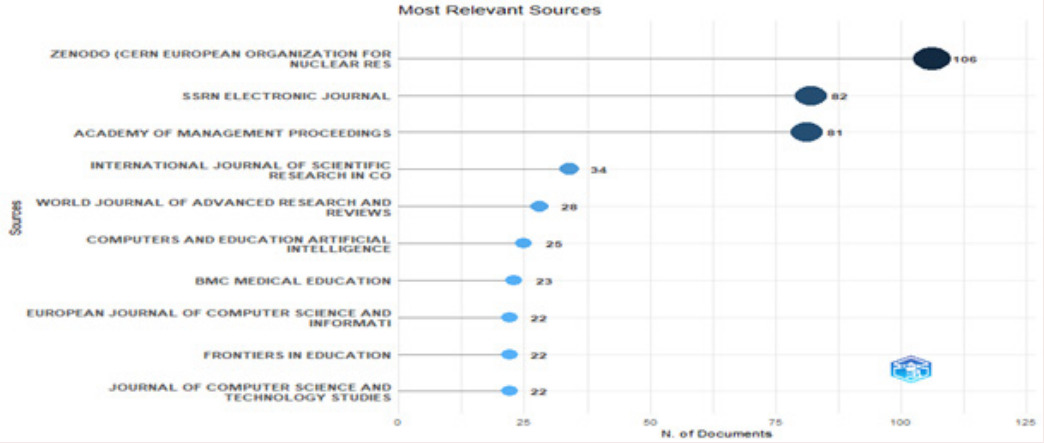
As shown in 500 As shown in Table 3, workplace AI literacy in the area of study in question is distributed in a highly interdisciplinary and developing source base, where the largest number of publications is registered by Zenodo (106), SSRN Electronic Journal (82), and Academy of Management Proceedings (82), but this does not mean high scholarly impact since Computers and Education: Artificial Intelligence gained the greatest total citation rate (2,431) from only 25 publications, whereas SSRN received 1,111 citations. The existence of sources within the fields of management, computer science, education, medical education, and information technology indicates that workplace AI literacy has not formed in a specialized HR or workforce journal yet but emerges due to the convergence of technological, learning, and organizational studies. The above observations are consistent with the findings of Jantakun et al. (2025), who conducted bibliometric analysis and concluded that computer science and education were dominant in the field but stressed the role of various other disciplines as well. On the other hand, the prominent presence of education-related literature sources is somewhat conflicting with the work-oriented theme of the current research and further confirms the results of Shoustikova et al. (2026), according to which the field of AI literacy is very much oriented towards education, higher education, and teachers' competence. In practice, this means that the issue of AI literacy requires the efforts of HR specialists, workforce developers, and managers to adapt the knowledge from the fields of education and computer sciences into workplace competence models. The cooperation between HRM, management, education, and computing scholars will help develop standardized tests of employee AI literacy and reskilling programs.
Rank | Year Published | Title of Paper | Citations |
|---|---|---|---|
1 | 2021 | Artificial intelligence capability: Conceptualization, measurement calibration, and empirical study on its impact on organizational creativity and firm performance | 1350 |
2 | 2020 | Influence of Artificial Intelligence (AI) on firm performance: the business value of AI-based transformation projects | 1151 |
3 | 2019 | Software engineering for machine learning: a case study | 1061 |
4 | 2022 | Unlocking the value of artificial intelligence in human resource management through AI capability framework | 816 |
5 | 2019 | Big data analytics and artificial intelligence pathway to operational performance under the effects of entrepreneurial orientation and environmental dynamism: A study of manufacturing organisations | 800 |
6 | 2021 | Artificial intelligence-driven innovation for enhancing supply chain resilience and performance under the effect of supply chain dynamism: an empirical investigation | 711 |
7 | 2023 | Navigating the Jagged Technological Frontier: Field Experimental Evidence of the Effects of Artificial Intelligence on Knowledge Worker Productivity and Quality | 703 |
8 | 2023 | Developing a model for AI Across the curriculum: Transforming the higher education landscape via innovation in AI literacy | 532 |
9 | 2020 | Ready or Not, AI Comes-An Interview Study of Organizational AI Readiness Factors | 504 |
10 | 2022 | Artificial intelligence and knowledge management: A partnership between human and AI | 500 |
Sources | Total Documents | Total Citation |
|---|---|---|
ZENODO (Cern European Organization for Nuclear Research) | 106 | 92 |
SSRN Electronic Journal | 82 | 1111 |
Academy of Management Proceedings | 81 | 30 |
International Journal of Scientific Research in Computer Science Engineering and Information Technology | 34 | 31 |
World Journal of Advanced Research and Reviews | 28 | 174 |
Computers and Education Artificial Intelligence | 25 | 2431 |
BMC Medical Education | 23 | 425 |
European Journal of Computer Science and Information Technology | 22 | 12 |
Frontiers in Education | 22 | 295 |
Journal of Computer Science and Technology Studies | 22 | 28 |
 | ||
From Table 4, it can be observed that the local intellectual impact of AI literacy in workplace research is made up of those researchers who conduct studies focusing on the topics of AI capability, organizational performance, digital transformation, and human-centric technology adoption. Patrick Mikalef tops the list with 134 local citations, followed by Manjul Gupta with 120, while Amélie Abadie (86), Prasanta Kumar Dey, Sian Joel-Edgar, and Soumyadeb Chowdhury (84 each) are part of the second most influential group of authors, with each of Haiyan Kong, Yehuda Baruch, and Yue Yuan getting 67 citations each, while Rongrong Teng got 66 citations. Importantly, the intellectual impact of Mikalef and Gupta is important since their AI capability paradigm makes a case that the success of AI implementation is dependent not just on the acquisition of technology but on connected organizational resources and competencies. It is consistent with Cetindamar et al. (2022) bibliometric analysis of workplace-related literature, where the authors mentioned that there were not many studies examining AI literacy among employees and defining its dimensions in digital workplaces (Babashahi et al., 2024). Still, AI literacy reviews at a higher level continue to be predominantly educational and related to digital learning, implying the existence of discipline imbalance that partially contradicts the capabilities-oriented authors mentioned in Table 4. Practically speaking, the implications of such a finding imply that an organization should view AI literacy not as a one-off technical training need but as an organizational capability; HR and learning and development departments may use the prevailing capabilities approach to develop assessment tests and training programs on AI competencies and collaboration with AI.
As shown in Table 5, contributions from institutional sources on AI literacy for the purpose of workplace studies are geographically and disciplinarily diversified, but research dominance lies within technologically advanced and globally connected universities. Top contributors include Massachusetts Institute of Technology, with 40 documents; University of Florida, with 33 documents; Education University of Hong Kong, with 30 documents; Chinese University of Hong Kong and Karlsruhe Institute of Technology, both with 28 documents; and other Canadian, Saudi Arabian, UK, Indonesian, and Chinese universities indicate the globalization of the field. In light of the significance of technology-based institutions together with those in the disciplines of education, healthcare, and multi disciplines, it is apparent that the readiness of employees for AI is influenced by the combination of technological, human, and professional skills, instead of the HRM research. As indicated by this analysis result, it is generally in agreement with the findings of Yang et al. (2025), where AI literacy was reviewed as an emerging research area with wide applications in education, ethics, society, and industry, whereas Shoustikova et al. (2026) reported that the AI literacy literature was mostly confined to educational research. However, the institutional concentration noted in Table 5 also poses a practical challenge: AI proficiency and workforce readiness information may be acquired disproportionately at institutions with a stronger digital capacity and research capability, while poorer economies may experience a slower introduction of AI in the workplace due to the expense and digital literacy challenge (Mahler et al., 2026). Hence, the solution is for universities, organizations, and governments to create cross-border research collaborations, share AI literacy learning materials, and workforce laboratories at universities to apply knowledge from high-capacity institutions to employee competency assessment and reskilling; this will ensure that AI literacy does not become another form of workforce discrimination.
The results presented in Table 6 show the clear geographic clustering of AI literacy literature in workplace studies, where the United States is the country that publishes the largest number of articles (516 documents) and citations (9,479), as well as follows China (280 documents, 4,173 citations) and India (149 documents, 1,237 citations). Interestingly, Germany has received 2,540 citations for 100 publications, which means a high citation impact despite the relatively low level of research output. At the same time, the involvement of such countries as Australia, Indonesia, Turkey, Saudi Arabia, and Pakistan in studying the topic of AI literacy shows that this issue goes beyond traditional Western research centers, though the clustering of publications in the USA, China, and other technologically developed countries shows that the global knowledge structure is unbalanced. This trend can be explained in light of the bibliographic review of Yang et al. (2025), where the authors note the increasing interest in AI literacy on the international level, as well as a rapid growth of AI literacy literature identified in a systematic review by Almatrafi et al. (2024); however, these studies have mostly an educational orientation.
Organizational context-specific reviews additionally point to the necessity of creating AI literacy programs that will help develop employees' capabilities to support the understanding of AI readiness as a concept that has to be adjusted to the specifics of certain work settings but not transferred equally throughout the globe (Savolainen et al., 2025; Yabanova, 2025). Geographically, this situation might result in the creation of AI readiness models that would be primarily based on high-capability technological environment and not take into account the diversity of infrastructure, work settings, digital skills, and training available in developing nations; therefore, there should be more cross-country cooperation between the governments, universities, HR institutions, and employers to create local assessments of AI literacy and industry-specific reskilling programs to make employee AI readiness a universal approach and not an exclusively developed country's capability.
Figure 2 depicts the multi-disciplinary body of knowledge of AI literacy in workplace studies, whereby computer science comes first in terms of domination, followed by psychology, knowledge management, engineering, business, artificial intelligence, political science, sociology, and disciplines related to education. The domination of computer science can be linked to the technological nature of AI, while the predominance of psychology and knowledge management disciplines proves the scholarly interest in studying employees' cognitive, behavioral, and knowledge abilities to interact with intelligent technologies. Such multi-disciplinarity corresponds to the findings of Almatrafi et al. (2024) in their systematic review, where AI literacy is defined as a quickly developing and multidimensional discipline, as well as to the opinion of Biagini et al. (2025).
The results somewhat contradict existing reviews of AI literacy, which are still dominated by the educational and learning perspective, whereas the word cloud presented here demonstrates greater relevance to computer science, psychology, and organizational knowledge fields. From a practical standpoint, the results indicate that an organization is not capable of solving the issue of employee AI readiness through technical training only; rather, workplace AI literacy programs need to consider AI knowledge, psychological readiness, critical thinking skills, knowledge sharing, and continuous learning, as stated by Cetindamar et al. (2024), who observed limited yet increasing attention paid to employee AI literacy in the digital work environment. In such a way, HR and L&D departments may benefit from applying this multidisciplinary structure of knowledge to designing effective AI competency programs.
Author | Total Citations | 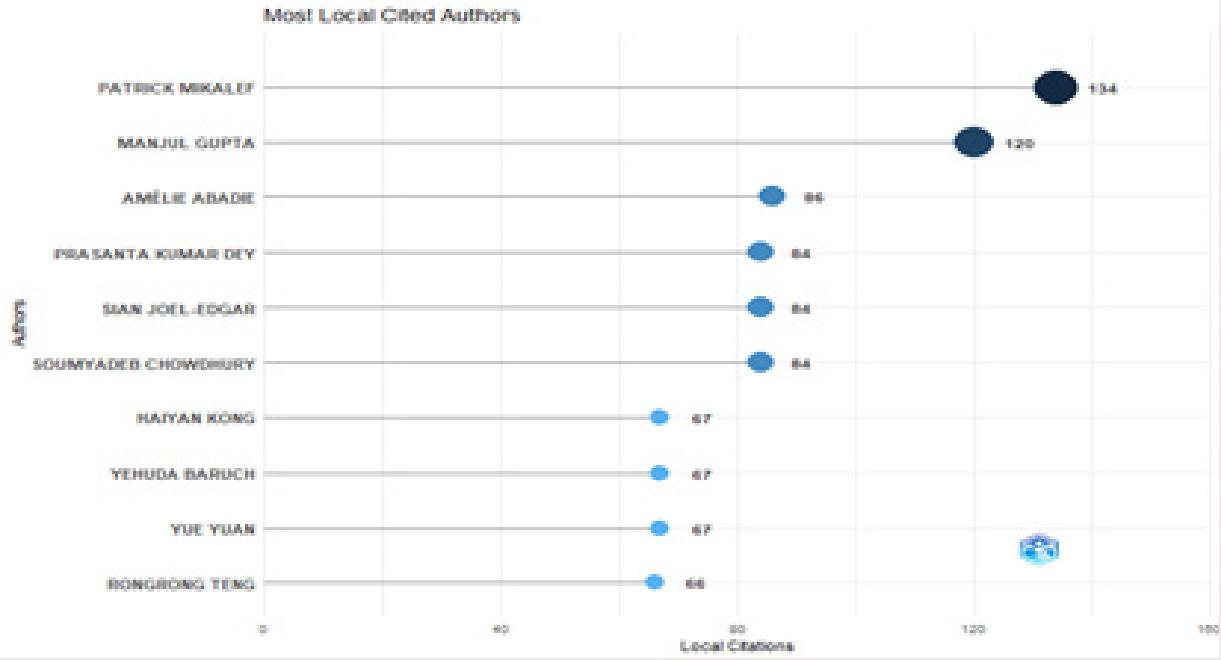 |
|---|---|---|
Patrick Mikalef | 134 | |
Manjul Gupta | 120 | |
Amélie Abadie | 86 | |
Prasanta Kumar Dey | 84 | |
Sian Joel-Edgar | 84 | |
Soumyadeb Chowdhury | 84 | |
Haiyan Kong | 67 | |
Yehuda Baruch | 67 | |
Yue Yuan | 67 | |
Rongrong Teng | 66 |
Affiliation | Total Documents | 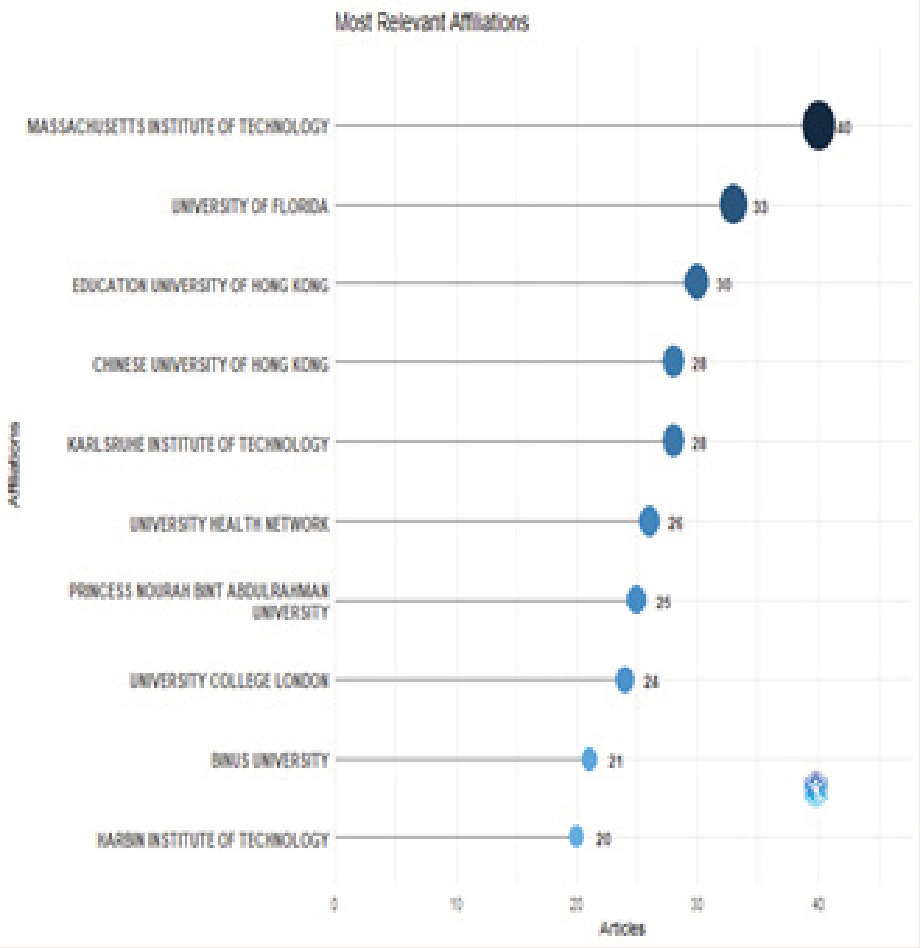 |
|---|---|---|
Massachusetts Institute of Technology | 40 | |
University of Florida | 33 | |
Education University of Hong Kong | 30 | |
Chinese University of Hong Kong | 28 | |
Karlsruhe Institute of Technology | 28 | |
University Health Network | 26 | |
Princess Nourah Bint Abdulrahman University | 25 | |
University College London | 24 | |
Binus University | 21 | |
Harbin Institute of Technology | 20 |
Figure 3 demonstrates the thematic structure of AI literacy in the workplace and shows how the field is situated between technological background, human capacity, and emerging workforce applications. Psychology, pedagogy, and medicine are located within the motor-theme quadrant, implying that intellectual development of AI literacy continues to depend on human thinking, learning, and professional application; this supports Almatrafi et al. (2024), who conducted a systematic review showing that AI literacy is a multidimensional concept combining technological knowledge, human, AI, usage, and design experience aspects. On the other hand, computer science, knowledge management, and business are located within the basic-theme quadrant implying their crucial relevance but lower internal development as the workplace AI literacy domain. Finally, the niche location of the workforce and applications of artificial intelligence implies that employee-oriented AI literacy is emerging but still insufficiently integrated into the overall knowledge structure; this is confirmed by Babashahi et al. (2024) who showed that there is a growing gap between the demands shaped by AI and existing workforce capacities.
However, there is some contrast with respect to literature on education-focused AI literacy, which keeps focusing on learning and educational aspects rather than on work organization issues (Biagini et al., 2025). From the practical perspective, organizations need to integrate these two themes through developing employee development programs that will incorporate computer science knowledge, knowledge management practices, business relevance, and psychological readiness. In this regard, rather than teaching employees generic AI tools, HR and learning and development departments may create special AI literacy tracks that will contribute to the formation of technical knowledge, critical thinking skills, confidence, learning attitude, and collaboration with AI. Finally, literature on organizational readiness for AI also highlights managerial support, collaborative organizational culture, organizational capabilities, and technological infrastructure as essential factors (Ali et al., 2025). Thus, it becomes obvious from the thematic map that one of the main ways of overcoming this problem is integration of the emerging workforce theme into a more significant research area. However, the poor connectivity among the clusters in Figure 4
Figure 4 presents a fragmented structure of collaboration on AI literacy research in the workplace, comprising a number of small, mostly isolated, clusters of authors rather than one highly cohesive academic community. The apparent clusters headed by Thomas K. F. Chiu and Tung-Ju Wu, Cynthia Breazeal, Sheshadri Chatterjee, and Patrick Mikalef denote the presence of separate research communities which could view AI literacy through the lenses of educational technology, human-computer interaction, organizational capability, and digital transformation. Such a finding fits Jantakun et al. (2025) bibliometric analysis of AI and digital literacy, where the authors found several co-authorship clusters featuring different strengths of connections among each other, while more general studies regard AI literacy as a fast-growing yet conceptually fragmented area of knowledge across multiple disciplines (Biagini et al., 2026).
differs from the inter-disciplinary diffusion of AI across research disciplines found by Hajkowicz et al. (2023), implying that the wider diffusion of AI across disciplines has not yet resulted in the formation of an integrated collaboration network for workplace AI literacy. As a practical matter, such disconnection will likely delay the process of developing standardized employee AI literacy competencies and create siloed approaches to training that focus separately on technical skills, learning, or organizational preparedness; increased collaboration among scholars in HRM, computer science, psychology, learning sciences, and industry would be useful for establishing common AI literacy metrics, industry-wide employee preparedness standards, and reskilling programs based on evidence. The results emphasize the importance of developing a comprehensive knowledge framework for Employee AI Literacy and Preparedness.
Country | Total Documents | Total Citation |
|---|---|---|
USA | 516 | 9479 |
CHINA | 280 | 4173 |
INDIA | 149 | 1237 |
UNITED KINGDOM | 102 | 1696 |
GERMANY | 100 | 2540 |
AUSTRALIA | 76 | 1597 |
INDONESIA | 65 | 252 |
TURKEY | 51 | 463 |
SAUDI ARABIA | 49 | 709 |
PAKISTAN | 45 | 129 |
Figure 5 shows that the conceptual framework for AI literacy in the workplace literature is rather comprehensive, multi-disciplinary, and has not yet been sufficiently established as one specific knowledge domain centered around employees. The centrality of artificial intelligence, workforce, AI competency in human resources, psychology, social psychology, and context suggests that employee AI readiness is developing as a result of interplay between technological knowledge, workforce ability, and human behavior aspects, whereas knowledge management, business, data science, computer science, and automation denote organizational and technological aspects of AI-assisted workplace activities. However, literacy, professional development, curriculum, pedagogy, and higher education are still present on the educational side of the conceptual framework, indicating that workplace research continues to rely heavily on the contributions of educational research into AI literacy. The findings of this study confirm the conceptualization provided by Almatrafi et al. (2024), where a systematic review defined AI literacy as a multi-dimensional phenomenon encompassing understanding, using, evaluating, and overall human interactions with AI technologies, similar to Zhang et al. (2025). Yet, in Lintner's (2024) systematic review of AI literacy scales, the majority of studies focused on measuring the general public, students, secondary-school, and teachers' levels, emphasizing the shortage of employee-specific measurement frameworks. As shown in Figure 5, the emergence of the workforce cluster is partially inconsistent with the findings. In practice, the conceptual divergence means that companies should not consider employees' readiness to use AI technologies based only on technical competence. Human resources departments along with learning and development departments should have competency models that link AI knowledge, application in work, critical evaluation, psychological readiness, ethical assessment, knowledge sharing, and professional development. With such a framework, companies will be able to determine real capability gaps in AI among their employees, provide targeted training programs and decrease the number of ineffective AI integration due to scattered skills development.
CONCLUSION
The review suggests that the notion of AI literacy in the workplace has quickly transformed into a relatively new interdisciplinary field of research that includes technology, human, knowledge management, organizational, and workforce perspectives. The fast-growing number of publications and their increase over the recent years reflects academic interest in the problem of employees' readiness for AI-based work; nevertheless, the intellectual and theoretical framework is not yet unified across computer science, psychology, education, business, and management. Given the prevalence of studies on AI capability and organizational performance along with the newly emerging issues of workforce applications of AI, human-AI interaction, and AI competence, it can be suggested that employee readiness for AI-based work does not relate to just having technical skills but also involves work-related understanding of AI technologies, critical thinking, psychological readiness, lifelong learning, and organizational factors. The fragmentation of the network of collaboration as well as the continuing impact of AI literacy research from an educational perspective confirm that the unification of the knowledge base in the area is not yet achieved.
From the above results, it is advised that organizations and HR departments should create an AI literacy program that evaluates and enhances employees' knowledge about AI, application skills, critical analysis, ethics, self-confidence, human-AI collaboration and adaptive learning, not just technical training. There should be increased collaboration between universities, researchers, practitioners, and policy makers to create standards for measuring AI literacy of employees, AI readiness standards that are contextually appropriate and employee reskilling strategies, especially in emerging markets. Employee AI Literacy and Readiness Knowledge Framework could be used as a basis for creating competency measurement tools, AI training programs, AI organizational readiness policy and empirical models. Future research can be done on validating knowledge dimensions from above among different industries and countries, creation of an AI literacy scale for employees, and impact of AI literacy on employee performance, innovation, adaptability, technostress, and human-AI collaboration.
ABBREVIATIONS
- AI
- Artificial Intelligence
- ABCD
- AI, Blockchain, Cloud, and Data
- GenAI
- Generative Artificial Intelligence
- HRM
- Human Resource Management
- L&D
- Learning and Development
- PRISMA
- Preferred Reporting Items for Systematic Reviews and Meta-Analyses
- SSRN
- Social Science Research Network.
CONFLICT OF INTEREST
The authors declare that there is no conflict of interest.