
Article · Volume 60, Issue 1 · pp. 286–297
Rhazya stricta Targets Proliferation/Apoptosis/ Inflammation Axis in Osteoarthritis: A Comprehensive Network Pharmacology Based Experimental Validation Study
Hui Xu1, Qiuming Zhou2, Jinming Lu1, Hao Zhang3
- 1Department of Rheumatology and Immunology, The First Affiliated Hospital of Wannan Medical College, Wuhu Anhui, CHINA.
- 2Department of Traditional Chinese Medicine, The Affiliated Dazu’s Hospital of Chongqing Medical University, Chongqing, CHINA.
- 3Department of Rheumatology and Immunology, Dalian University of Technology Affiliated Central Hospital (Dalian Central Hospital), Dalian Liaoning, CHINA.
Abstract
Background: Osteoarthritis (OA), a degenerative joint disorder, demands multi-target therapeutic strategies. Rhazya stricta, a traditional medicinal plant, was explored for its phytochemicals and their anti-OA potential.
Objectives: To investigate Rhazya stricta's anti-OA mechanisms via integrated network pharmacology and experimental validation.
Materials and Methods: Phytochemicals from IMPPAT and KNAPSACK databases (39 compounds) underwent ADME/toxicity screening (SwissADME, Molsoft, ProTox-II), yielding 10 non-toxic candidates. SwissTargetPrediction and GeneCards identified OA-associated targets, intersected via Venny 2.0. STRING analyzed Protein-Protein Interactions (PPI), while Cytohubba prioritized hub genes. Functional enrichment (ShinyGo) mapped pathways, and Cytoscape visualized compound-targetpathway networks. Experimental validation included MTT assay (cytotoxicity) and qRT-PCR (gene expression) in SW-982 cells.
Results: Phytochemical profiling identified 10 bioactive compounds with favorable pharmacokinetics. Intersection of 286-compound targets and 770-OA genes revealed 86 shared targets. PPI network analysis prioritized CASP3, ESR1, EGFR, PPARG, and MMP9 as hub genes, linked to PI3K-Akt, MAPK, and inflammation pathways. KEGG enrichment highlighted OA-relevant pathways (e.g., calcium signaling, EGFR resistance). Cytoscape networks demonstrated multi-target interactions. Experimentally, Rhazya stricta extract exhibited dose-dependent cytotoxicity (IC50: 45 µg/mL) and modulated hub gene expression: CASP3 upregulated (2.6-fold, p=0.001), while ESR1 and EGFR downregulated (0.41-and 0.34-fold, p=0.001), aligning with bioinformatics predictions. RABG2 dataset analysis confirmed elevated CASP3, ESR1, and EGFR in OA tissues, with significant gene correlations (ESR1-CASP3: r=0.38; CASP3-EGFR: r=-0.12; p<0.001).
Conclusion: Rhazya stricta targets OA through synergistic modulation of apoptosis (CASP3), inflammation (ESR1), and proliferation (EGFR) via key pathways, validated experimentally. This study underscores its potential as a multi-target therapeutic agent for OA, bridging computational predictions with biological evidence.
Keywords: Rhazya stricta; Phytochemicals; Osteoarthritis; Protein-Protein Interaction; Quantitative Reverse Transcription-Polymerase Chain Reaction
FULL TEXT
INTRODUCTION
Osteoarthritis, a prevalent chronic joint condition worldwide, significantly diminishes the quality of life for millions, particularly older adults. Characterized by progressive cartilage erosion, synovial inflammation, and bone remodelling, OA manifests as pain, stiffness, and impaired mobility. 1,2 Its complex etiology arises from interplay between genetic predisposition, mechanical strain, metabolic dysregulation, and inflammatory pathways. 3 Current treatments, predominantly analgesics and anti-inflammatory agents, focus on symptom management but fail to halt disease progression or repair damaged tissues. 4 This gap underscores the urgent need for innovative therapies targeting underlying molecular mechanisms.
Recent advancements in network pharmacology, a multidisciplinary approach integrating computational biology, systems science, and data analytics, are reshaping drug discovery. 5 Desertion from conventional single-target strategies, this framework examines interconnected biological networks to identify multi-target interventions, offering promise for complex diseases like OA. 6 By mapping signalling pathways involved in joint degradation, researchers can pinpoint critical nodes for therapeutic intervention, potentially enhancing efficacy while minimizing side effects. Such strategies may yield disease-modifying treatments that address both symptoms and structural deterioration.
Parallel to these developments, natural products remain a cornerstone of drug discovery, valued for their structural diversity and evolutionarily refined bioactivities. 7 Many plant-derived compounds exhibit anti-inflammatory, antioxidant, and cartilage-protective properties relevant to OA. 8,9 Their inherent multi-target effects align synergistically with network pharmacology, enabling simultaneous modulation of disease pathways. For instance, Rhazya stricta, a plant traditionally used in Middle Eastern and South Asian medicine and increasingly integrated into Traditional Chinese Medicine (TCM), contains bioactive alkaloids with demonstrated anti-inflammatory and immunomodulatory effects. 10 These properties position it as a candidate for OA treatment, where chronic inflammation and oxidative stress drive joint damage.
The convergence of network pharmacology and natural product research offers transformative potential. By employing network-based strategies, we herein systematically explore how the bioactive constituents of Rhazya stricta interact with multiple molecular targets involved in the pathogenesis of osteoarthritis. Such an approach not only enhances our understanding of the multifaceted mechanisms underlying its therapeutic effects but also provides a rational basis for optimizing its use in clinical applications.
MATERIALS AND METHODS
In silico Analysis
Phytochemical Identification
The study began with the comprehensive identification of phytochemicals present in Rhazya stricta. Two reputable online databases, IMPPAT and KNAPSACK, were utilized for this purpose. 11,12,13 IMPPAT, an online resource offering extensive data on Indian medicinal plants, provided detailed phytochemical profiles, while KNAPSACK, known for its compound screening capabilities, offered complementary data. Following the extraction of phytochemical information from both platforms, duplicates were removed to form a unique list of compounds for further screening with ADME, druglikeness and toxicity.
ADME and Druglikeness Screening
The identified compounds were then subjected to ADME (Absorption, Distribution, Metabolism, and Excretion) analysis to predict their pharmacokinetic behaviour. The SwissADME online tool was employed to evaluate the bioavailability, solubility, and other drug-relevant parameters. 14 Complementarily, Molsoft was used to assess druglikeness, ensuring that only compounds with favourable chemical properties were selected. Phytochemicals were selected based on the criteria of molecular weight ≤500 Da, oral bioavailability ≥ 30%, and drug-likeness ≥ 0.18, with duplicate entries removed and structures verified through the PubChem database. This dual approach allowed for an efficient narrowing down of candidates based on their potential for further development.
Toxicity Prediction
To ensure safety, the compounds passing the initial screening underwent toxicity prediction using Protox 3.0, an online platform dedicated to predicting the toxicological profiles of chemicals. 15 The selection citeria included Carcinogenicity, Cardiotoxicity, Cytotoxicity, Hepatotoxicity, Immunotoxicity, Mutagenicity, Nephrotoxicity, Neurotoxicity, and Respiratory toxicity. This step was crucial in eliminating compounds that might exhibit adverse effects, thereby focusing the study on the safest candidates for potential therapeutic applications.
Target Prediction and Disease Association
Following the compound screening, target prediction was conducted using SwissTargetPrediction. 16 This online tool is specifically designed to predict potential protein targets of small molecules, thereby linking phytochemicals to possible molecular interactions. In parallel, disease-associated targets for osteoarthritis were identified using the GeneCards database. 17 GeneCards is an authoritative source that compiles gene-centric data from various integrated genomic databases, facilitating the identification of genes linked with specific diseases. The number of targets was screened with a Gifts score of ≥ 60%.
Merging and Network Construction
The targets derived from the phytochemical compounds were then compared with the osteoarthritis-associated genes. Venny 2.0, an online tool for creating Venn diagrams, was employed to identify overlapping targets between the compound-related and disease-associated datasets. The common targets obtained from this analysis were subjected to further scrutiny by constructing a Protein-Protein Interaction (PPI) network using the STRING database. 18 STRING is an online platform that aggregates known and predicted interactions between proteins, thereby elucidating complex biological networks. The high specificity of the network was maintained by including a confidence threshold of ≥ 0.400 and eliminating the unconnected nodes.
Hub Gene and Pathway Analysis
To highlight key regulatory proteins, the PPI network was analyzed with Cytoscape v3.10.3 (Cytoscape Consortium, USA), a powerful network visualization tool that enables detailed inspection of molecular interactions. Within Cytoscape, the Cytohubba plugin was utilized to identify hub genes based on network connectivity. Additionally, ShinyGo was employed to perform Gene Ontology (GO) and KEGG pathway enrichment analyses, thereby providing insights into the Biological Processes (BP), Cellular Components (CC), and Molecular Functions (MF) associated with the target proteins. 19 The SRplot online platform was then used to generate visual plots including Bar, Sankey, and Chord diagrams, facilitating a clearer understanding of the enriched pathways.
Differential Expression and correlation
The RABC Database served as an online resource to explore gene expression correlations among the identified hub genes, thus linking computational predictions with potential biological outcomes. 20
EXPERIMENTAL VALIDATION
Extraction of Rhazya stricta
The experimental validation commenced with the extraction of bioactive compounds from the aerial parts of Rhazya stricta. The plant material was dried and ground into a fine powder. The extraction procedure involved the maceration of the powdered material in a solvent mixture chloroform:methanol:water (1:1:0.3, v/v/v). This solvent system was chosen based on its ability to efficiently dissolve a wide range of phytochemicals. Following the maceration period, the resulting solution was filtered to separate the plant debris, and the filtrate was concentrated using evaporation. The concentrated extract was then reconstituted in DMSO solvent to prepare a stock solution for subsequent assays.
Cell Culture
The in vitro experimental model involved culturing a human synovial sarcoma cell line (SW-982; ATCC; Catalog Number HTB-93™) that is widely used as a surrogate for studying osteoarthritic conditions. The cells were maintained in a DMEM standard cell culture medium supplemented with necessary growth factors (Fetal Bovine Serum; FBS) and antibiotics to prevent contamination. Cultivation was performed in a controlled environment with regulated temperature at 37ºC and 5% CO2. Cells were regularly passaged to maintain viability, and they were seeded in appropriate culture vessels prior to treatment with the plant extract.
Cytotoxicity Assessment
To evaluate the cytotoxicity of the Rhazya stricta extract, an MTT assay was performed in 96-well plates. This assay relies on the reduction of a tetrazolium compound by viable cells, resulting in the formation of formazan crystals. After treatment with the extract for 24 hr at concentrations 0, 25, 50, 100 and 200 mg/ mL, the MTT reagent was added to the culture, and the cells were incubated to allow for the metabolic reduction process. The formazan crystals were then solubilized using DMSO, and the absorbance was measured spectrophotometrically at 570 nm using microplate reader (Model iMark™, Bio-Rad Laboratories, Hercules, CA, USA). The assay provided a quantitative measure of cell viability and allowed for the determination of a concentration range that did not induce significant cytotoxicity, ensuring that subsequent gene expression analyses were conducted under conditions that maintained cellular integrity. The IC50 value was also determined using AAT Bioquest online tool for IC50 calculator by AAT Bioquest, Inc.
Gene Expression Analysis Using qRT-PCR
To investigate the molecular effects of the Rhazya stricta extract, gene expression analysis was performed using LightCycler® 480 (Roche Diagnostics, Mannheim, Germany) quantitative real-time PCR (qRT-PCR) system. Total RNA was extracted from both treated and control cells using an RNA isolation protocol that ensures high purity and integrity (TRIzol reagent, Thermo Fisher Scientific). Following RNA extraction, reverse transcription was conducted to synthesize complementary DNA (cDNA). The qRT-PCR was then carried out using a SYBR Green-based detection method. Specific primers by Origene (OriGene Technologies, Inc. Rockville, MD 20850, US) were used target key hub genes, CASP3 (HP207674), ESR1 (HP200110), and EGFR (HP208404), identified from the in silico analysis. The gene expression levels were normalized first using an endogenous reference gene GADPH, followed by normalization to control group and relative expression was calculated using an established comparative threshold cycle method. This approach allowed for the precise quantification of changes in gene expression induced by the extract, thus validating the in silico predictions.
CASP3
Forward: GGAAGCGAATCAATGGACTCTGG,
Reverse: GCATCGACATCTGTACCAGACC.
ESR1
Forward: GCTTACTGACCAACCTGGCAGA,
Reverse: GGATCTCTAGCCAGGCACATTC.
EGFR
Forward: AACACCCTGGTCTGGAAGTACG,
Reverse: TCGTTGGACAGCCTTCAAGACC.
RESULTS
Phytochemical Screening and ADME-Tox Profiling
A comprehensive phytochemical screening of Rhazya stricta identified 39 compounds, with 23 retrieved from IMPPAT and 16 from KNAPSACK. After removing duplicates, 34 unique compounds were retained (Supplementary Table S1). Subsequent ADME (Boiled Egg model representing different physicochemical parameters; Figure 1A) and druglikeness analysis using SwissADME and Molsoft applied stringent criteria: molecular weight (200-500 Da), bioavailability (≥0.55), and druglikeness score (≥0.18). This eliminated 12 compounds, leaving 22 candidates. Toxicity profiling via Protox 3.0 further excluded 12 compounds, resulting in 10 non-toxic, pharmacokinetically favourable phytochemicals for downstream analysis (Table 1).
TARGET IDENTIFICATION AND OSTEOARTHRITIS ASSOCIATION
SwissTargetPrediction predicted 1,000 potential biological targets for the 10 compounds. Filtering for a probability score ≥0.10 reduced the list to 444 targets, and removal of duplicates yielded 286 unique targets (Supplementary Table S2). Concurrently, 5,394 osteoarthritis-associated genes were retrieved from GeneCards using the keyword "Osteoarthritis. " Application of a GeneCards Inferred Functionality Score (GIFtS) ≥60 refined the disease-related targets to 770 high-confidence genes (Supplementary Table S3). Intersection of the 286 compound targets and 770 osteoarthritis targets using Venny 2.0 revealed 86 shared targets, suggesting their potential role in the plant's anti-osteoarthritic mechanism (Figure 1B).
PPI Network Analysis and Hub Gene Prioritization
The 86 overlapping targets were analyzed via STRING to generate a Protein-Protein Interaction (PPI) network (confidence score ≥70, unconnected nodes excluded). The network exhibited vigorous connectivity: 86 nodes, 676 edges, average node degree of 15.7, and an average local clustering coefficient of 0.564. The PPI enrichment p-value (<1.0e-16) confirmed non-random biological associations. Cytohubba (Cytoscape plugin) identified CASP3, ESR1, EGFR, PPARG, MMP9, PTGS2, MAPK3, ERBB2, GSK3B, and MDM2 as the top 10 hub genes based on degree centrality (Figures 2A and 2B).
Functional Enrichment and Pathway Mapping
GO and KEGG pathway analysis of the 86 targets via ShinyGo revealed enriched BPs involved in osteoarthritis, including response to organic cyclic compounds, cellular response to oxygen-containing compounds, and regulation of phosphate and phosphorus metabolic processes. Enriched CC included caveolae, plasma membrane rafts, receptor complexes, and anchoring junctions. The MF associated with osteoarthritis involved protein kinase activity, phosphotransferase activity, enzyme binding, and nucleotide binding (Figure 3).
Phytochemical | Structure | Formula | MW | BA | DL |
|---|---|---|---|---|---|
Strictanol | 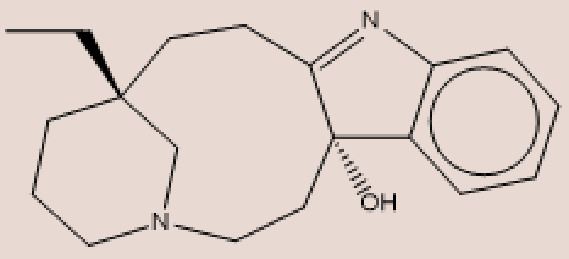 | C H NO 19 26 2 | 298.42 | 0.55 | 0.38 |
Rhazinilam | 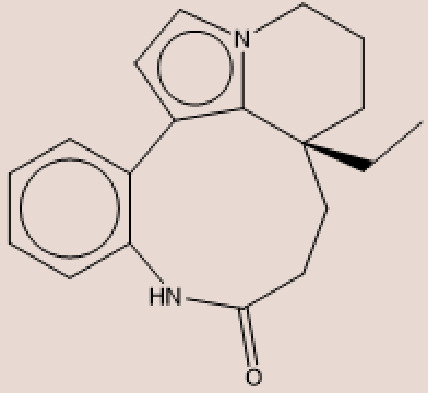 | C H NO 19 22 2 | 294.39 | 0.55 | 0.44 |
Quebrachamine | 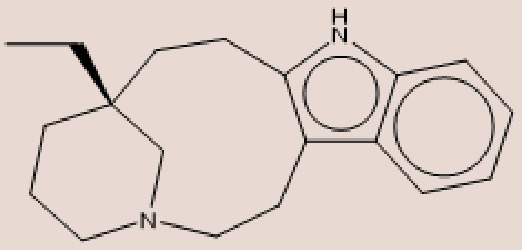 | C H N 19 26 2 | 282.42 | 0.55 | 0.47 |
Compound-4 or methyl (10S,12R,13E,18S)-13-ethylidene- 8,15-diazapentacy clo[10.5.1.01,9.02,7.010,15] octadeca- 2,4,6,8-tetraene-18-carboxylate | 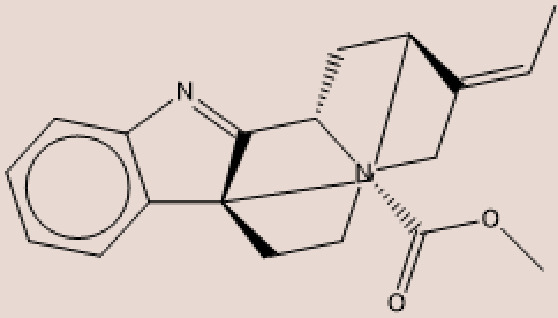 | C H NO 20 22 2 2 | 322.4 | 0.55 | 1.04 |
Ursolic acid | 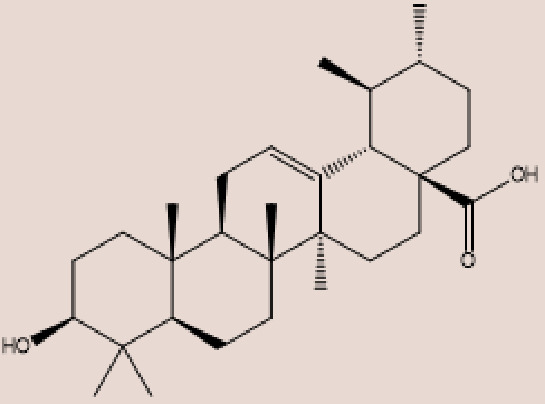 | C H O 30 48 3 | 456.7 | 0.85 | 0.66 |
Rhazimine | 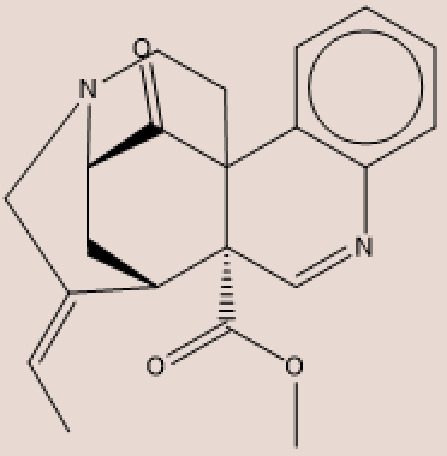 | C H NO 21 22 2 3 | 350.41 | 0.55 | 1.24 |
Corynan-17-ol | 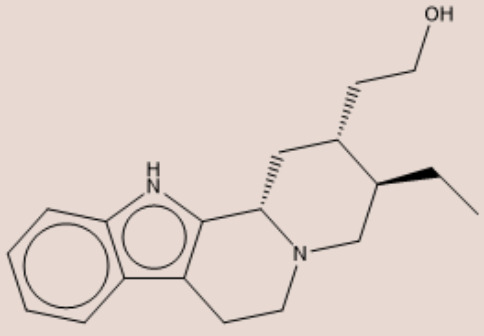 | C H NO 19 26 2 | 298.42 | 0.55 | 0.31 |
(-)-Quebrachamine | 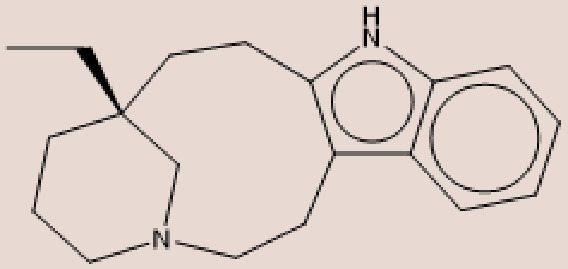 | C H N 19 26 2 | 282.42 | 0.55 | 0.47 |
(+)-Eburnamenine | 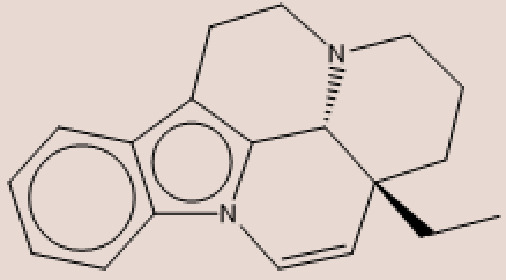 | C H N 19 22 2 | 278.39 | 0.55 | 0.78 |
Strictamine | 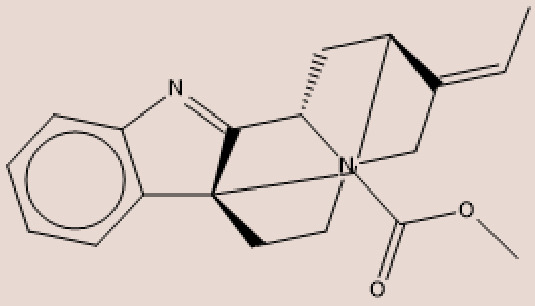 | C H NO 20 22 2 2 | 322.4 | 0.55 | 1.04 |
KEGG pathway analysis revealed enrichment in PI3K-Akt, MAPK, Ras, and Rap1 signaling pathways. Additional pathways included inflammatory mediator regulation of TRP channels, calcium signaling, and lipid and atherosclerosis. Other enriched pathways were related to PD-L1 expression, EGFR tyrosine kinase inhibitor resistance, endocrine resistance, prostate cancer, hepatitis B, human cytomegalovirus infection, and microRNAs in cancer. Visualization tools (SRplot) generated a BP-CC-MF bar plot (Figure 3), a Sankey diagram linking pathways to genes (Figure 4), and a cord plot highlighting gene-pathway interactions (Figure 5).
Integrated Mechanistic Network
A Cytoscape-based network integrating Rhazya stricta, its bioactive compounds, enriched targets, and pathways illustrated the plant's multi-target mechanism against osteoarthritis (Figure 6). The network highlighted direct associations between phytochemicals and hub genes such as CASP3 and EGFR, which modulate apoptosis and inflammation.
Hub Gene Expression and Correlation in Osteoarthritis
Analysis of the RABC92 dataset (785 osteoarthritis samples) confirmed elevated expression of CASP3, ESR1, and EGFR in osteoarthritic tissues (Figure 7A). Strong positive (ESR1-CASP3: r=0.38; p<0.001) and negative (CASP3-EGFR: r=-0.12; p<0.001) correlations were observed between these genes, suggesting synergistic roles in disease progression (Figure 7B).
EXPERIMENTAL VALIDATION
MTT Cytotoxicity Assay
The chloroform:methanol:water (1:1:0.3, v/v/v) extract of Rhazya stricta was evaluated for cytotoxicity in SW-982 cells using MTT assay. Dose-dependent inhibition of cell viability was observed, with IC50 value of 45 µg/mL after 24 hr (Figure 8A). The extract exhibited significant cytotoxicity at 50 µg/mL (cell viability: 48±2%, p<0.001 vs. control), confirming its therapeutic potential.
The qRT-PCR Analysis of Hub Genes
Post-treatment with the IC50 concentration of the extract (24 hr), qRT-PCR analysis revealed significant upregulation of CASP3 (2.6 of 2-ΔΔCt, p=0.001) (Figure 8B), ESR1 (0.41 of 2-ΔΔCt, p=0.001) (Figure 8C), and EGFR (0.34 of 2-ΔΔCt, p=0.001) (Figure 8D) in SW-982 cells compared to untreated controls. This aligns with computational predictions, validating the extract's ability to suppress osteoarthritis-associated gene expression.
DISCUSSION
The bioinformatics investigation of bioactive compounds from Rhazya stricta resulted in an identification of 10 hub genes; however, we selected the 3 highest-scoring genes, namely CASP3, ESR1, and EGFR, from the compound-target network for further comprehensive study. CASP3, ESR1, and EGFR play pivotal roles in cellular homeostasis and disease pathogenesis. CASP3, a key executor of apoptosis, is often dysregulated in cancer, where its downregulation promotes tumor survival. 21 Conversely, excessive CASP3 activation contributes to tissue degeneration in neurodegenerative disorders. 22 ESR1, encoding estrogen receptor alpha, mediates anti-inflammatory and chondroprotective effects, with its loss linked to accelerated osteoporosis and OA. 23 EGFR, a driver of cell proliferation and repair, is overexpressed in cancers, fostering unchecked growth, while its deficiency impairs tissue regeneration in chronic wounds or degenerative diseases. 24 In OA, synovial apoptosis and inflammation drive joint destruction. CASP3 upregulation in synovial cells may exacerbate apoptosis, perpetuating synovial atrophy and cartilage breakdown. 25 However, targeted induction of apoptosis in diseased cells could mitigate pathological hyperplasia. ESR1 downregulation in OA synovium reduces estrogen-mediated protection, amplifying inflammation and matrix degradation. 26 EGFR's role is context-dependent: while overexpression may promote synovial hyperplasia, its deficiency could impair tissue repair, exacerbating OA progression. 27 In normal synovial cells, balanced CASP3 ensures controlled apoptosis, maintaining tissue integrity. Adequate ESR1 levels suppress inflammation, while EGFR supports synovial repair. In contrast, SW-982 cells-a synovial sarcoma line modelling diseased synovium-exhibit dysregulated apoptosis and proliferative stress. 28 Higher CASP3 in SW-982 suggests a stress-induced pro-apoptotic state, while diminished ESR1 and EGFR reflect loss of protective signaling and reparative capacity. Selective elimination of SW-982 cells via apoptosis could thus represent a therapeutic strategy, eradicating damaged cells while sparing healthy tissue.
Our qRT-PCR data align with these mechanisms, revealing elevated CASP3 and reduced ESR1 and EGFR in SW-982 cells. Increased CASP3 implies apoptotic susceptibility, potentially exploitable for targeted cell death. Lower ESR1 correlates with diminished anti-inflammatory capacity, exacerbating disease phenotypes, while reduced EGFR may limit proliferative repair, rendering SW-982 cells vulnerable to apoptosis. This expression profile supports the hypothesis that SW-982 cell death reflects elimination of dysfunctional cells, a process mirrored in OA synovium where apoptosis clears damaged cells to curb pathology.
The enriched BP terms emphasize cellular responses to endogenous and oxygen-containing compounds, regulation of phosphate and phosphorus metabolism, and cellular reactions to organic substances and chemical stimuli, suggesting a strong link between osteoarthritis and metabolic and inflammatory pathways. Notable CC terms include caveolae, membrane rafts, receptor complexes, and anchoring junctions, which are crucial for cellular signaling and mechanotransduction in joint tissues. The MF terms highlight protein kinase activity, phosphotransferase activity, and enzyme binding, indicating significant involvement of phosphorylation and signaling cascades in osteoarthritis pathophysiology. KEGG pathway analysis reveals several signaling pathways relevant to osteoarthritis, including the PI3K-Akt, MAPK, Ras, and Rap1 pathways, which are critical for cell survival, proliferation, and inflammatory responses. 29 The enrichment of pathways such as inflammatory mediator regulation of TRP channels and calcium signaling suggests a role for pain perception and neuroinflammation in osteoarthritis. 30 Additionally, pathways linked to cancer, such as PD-L1 expression and microRNAs in cancer, may indicate shared molecular mechanisms between osteoarthritis and tumorigenesis, particularly in chronic inflammation and tissue remodelling. The presence of lipid and atherosclerosis pathways also suggests a metabolic component to osteoarthritis progression, potentially linking dysregulated lipid metabolism to cartilage degradation.
CONCLUSION
Integrated network pharmacology and experimental assays elucidated the anti-osteoarthritic efficacy ofRhazya stricta. Phytochemical screening isolated bioactives, refined to non-toxic leads via ADME-toxicity filtering. Target-disease interactome mapping revealed convergence on OA-associated signaling-principally PI3K-Akt and MAPK cascades-with hub genes CASP3, ESR1, EGFR central to the mechanistic axis.In vitro assays in SW-982 synoviocytes demonstrated extract-induced cytotoxicity and hub-gene modulation, concordant within silico predictions. Transcriptomic correlations in OA tissues highlighted the synergistic interplay of CASP3-mediated apoptosis and ESR1/EGFR-associated survival signaling. CASP3 activation favoured elimination of pathologic cells, whereas ESR1 and EGFR downregulation reflected impaired cytoprotective pathways. This dualistic modulation supports therapeutic paradigms combining selective pro-apoptotic induction in diseased synovium with restoration of protective signaling, experimentally substantiating gene-targeted strategies to attenuate joint degeneration.
SUMMARY
A comprehensive analysis of the bioactive constituents of Rhazya stricta identified an initial 39 phytochemicals, which were further refined to 34 unique compounds after eliminating duplicates. Their ADME properties were evaluated using SwissADME and Molsoft, according to strict requirements for molecular weight (200-500 Da), bioavailability (≥0.55), and druglikeness (≥0.18), resulting in the exclusion of 12 compounds. Following toxicity screening using Protox 3.0, the selection was narrowed to 10 non-toxic candidates exhibiting favourable pharmacokinetics. SwissTargetPrediction identified these substances as potential interactors with 1,000 targets, further refined to 286 distinct targets (probability score ≥0.10) after filtration. Meanwhile, 5,394 genes associated with osteoarthritis were identified by GeneCards and refined to 770 high-confidence targets (GIFtS ≥60). The Venny 2.0 intersection yielded 86 common targets associated with anti-osteoarthritic action. The inference of the protein-protein interaction network by STRING yielded a compact network of 86 nodes and 676 edges, whereas Cytohubba revealed key hub genes including CASP3, ESR1, EGFR, PPARG, and MMP9. The functional enrichment analysis of the hub genes revealed involvement in notable biological processes and signalling pathways, including PI3K-Akt, MAPK, Ras, Rap1, as well as pathways associated to inflammation and cellular stress. A comprehensive network constructed in Cytoscape demonstrated direct associations between phytochemicals and key genes regulating apoptosis and inflammation. Experimental confirmation by MTT test and qRT-PCR confirmed dose-dependent cytotoxicity in SW-982 cells (IC50 =45 µg/mL) and substantial alteration of CASP3, ESR1, and EGFR expression. This integrated study demonstrates a potential multi-target strategy, paving the way for novel osteoarthritis therapies and improved patient outcomes in the future.
ABBREVIATIONS
- OA
- Osteoarthritis
- ADME
- Absorption, Distribution, Metabolism, and Excretion
- PPI
- Protein-Protein Interaction
- qRT-PCR
- Quantitative Real-Time Polymerase Chain Reaction
- IC 50
- Half Maximal Inhibitory Concentration
- MTT
- 3-(4,5-Dimethylthiazol-2-yl)-2,5-diphenyltetrazolium bromide (assay)
- KEGG
- Kyoto Encyclopedia of Genes and Genomes
- GO
- Gene Ontology
- GIFtS
- GeneCards Inferred Functionality Score
- IMPPAT
- Indian Medicinal Plants, Phytochemistry and Therapeutics
- CASP3
- Caspase 3
- ESR1
- Estrogen Receptor 1
- EGFR
- Epidermal Growth Factor Receptor
- PPARG
- Peroxisome Proliferator-Activated Receptor Gamma
- MAPK
- Mitogen-Activated Protein Kinase
- PI3K
- Phosphoinositide 3-Kinase.
CONFLICT OF INTEREST
The authors declare that there is no conflict of interest.